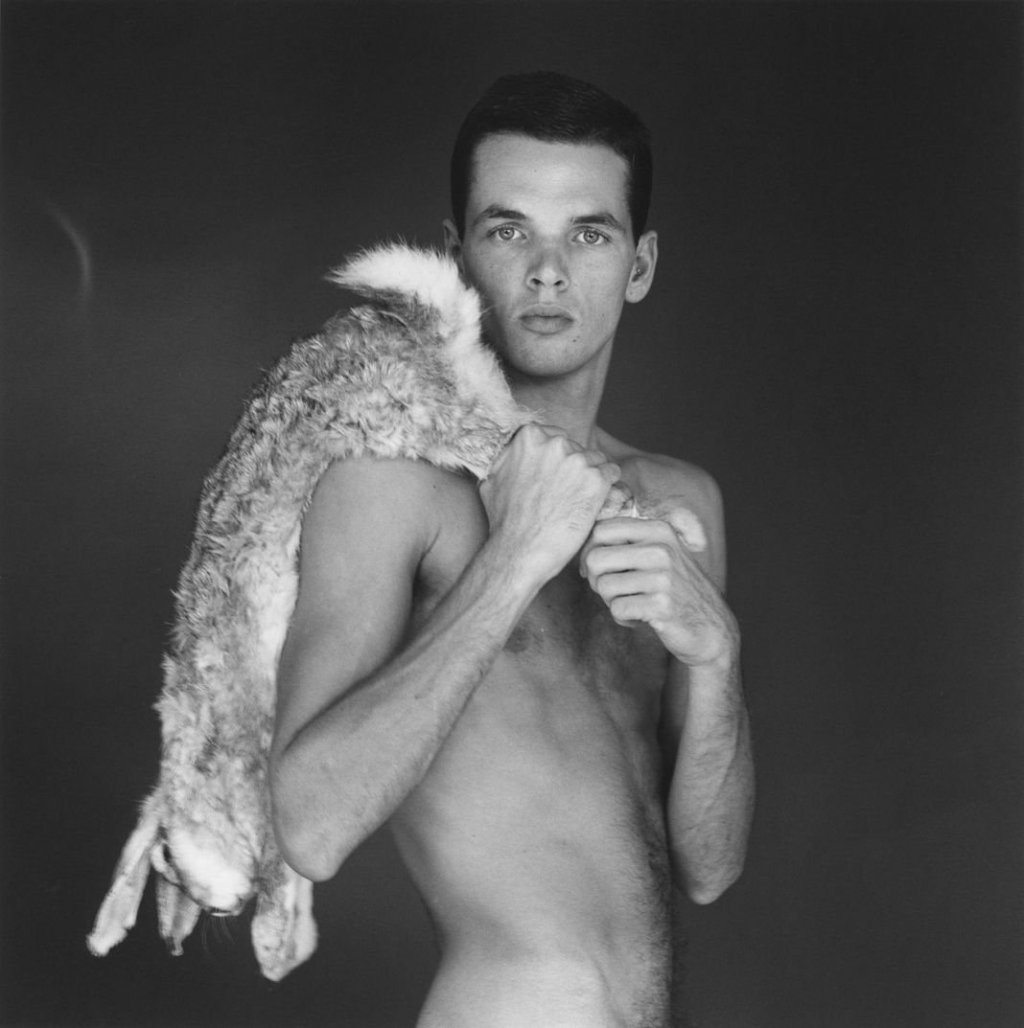
In Marcus Leatherdale, Robert Mapplethorpe stages a portrait that is both classical and subversive: a young man, nude but composed, draped not in cloth but the flayed skin of an animal. The gesture recalls mythic archetypes—Orpheus, Saint Sebastian, Narcissus—but without sentiment or martyrdom. The subject stares back with unwavering directness, meeting the gaze with equal intensity, claiming his space not through dominance but through presence.
Mapplethorpe’s hallmark precision is here in full force: the tonal range is exquisite, the form sculptural, the eroticism controlled. But beneath the surface lies tension—between predator and prey, sensuality and severity, beauty and its cost. Marcus Leatherdale is not just a portrait. It is a meditation on masculine vulnerability, aesthetic power, and the artifice of myth remade in queer flesh.